At the airport again – if you are wondering why I am leaving Singapore already, it was a planning mistake (details in my very first blogpost; don’t book a trip when you are halfway asleep studying for your hunting licence). I am leaving the city in a couple of hours for China. As the jetlag is about to hit I am more tired than excited but it is clear to me that Singapore was the training camp and now the real adventure begins. Being pretty fluent in English communication was no issue, as well as internet, payment etc.
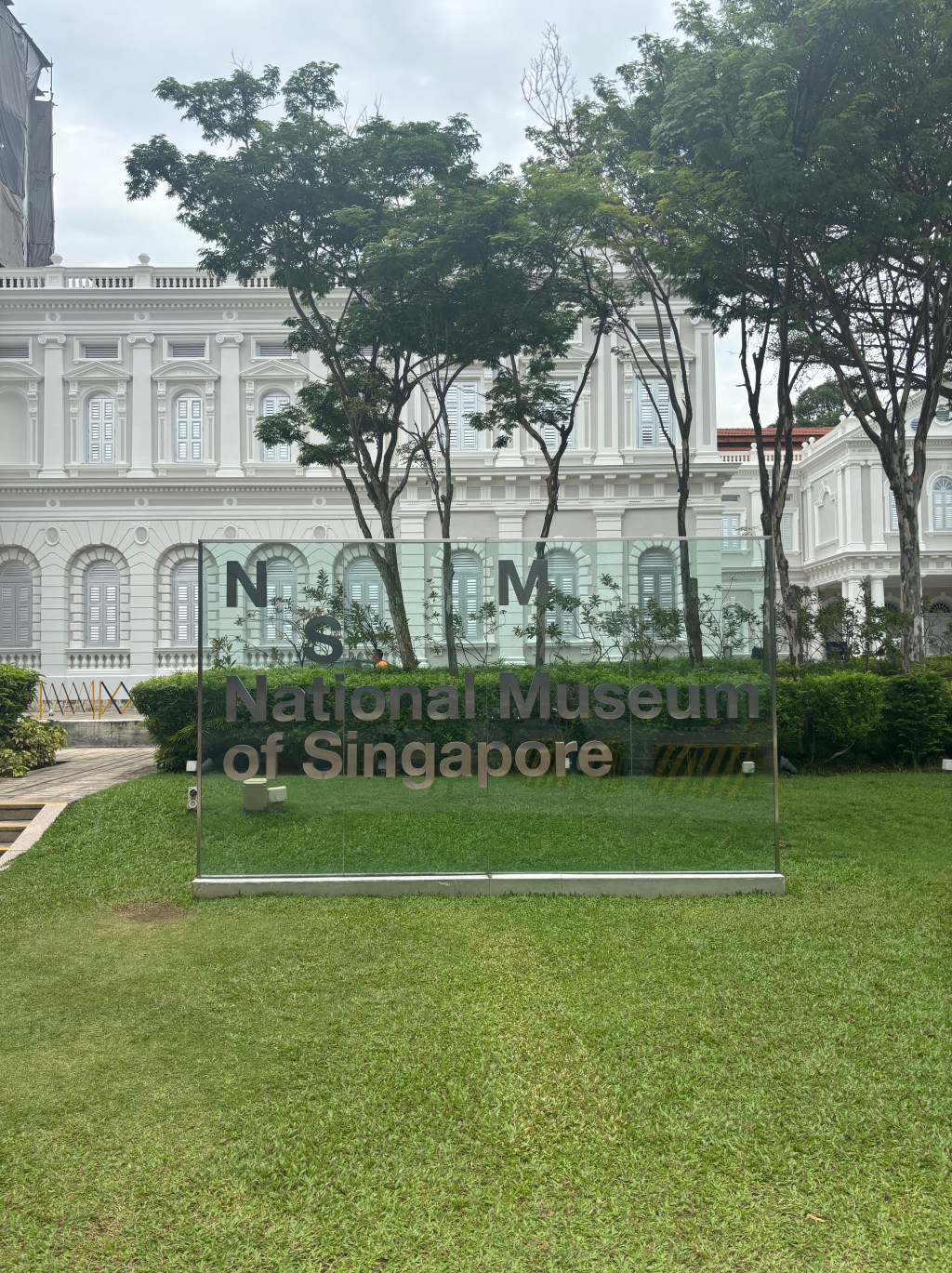
Day 2 in SG was as great as the first one and even though I don’t like to sugarcoat it was a positive experience. What were my take aways from day two? Going to the National Museum of Singapore gave me the experience to dive deeper in the history of the city state. First I had a look around on my own but besides that I also booked a tour and here are some insights I want to share with you.
My tourguide Rosy (a woman approximately in her 60s) told us that her grandparents saw themselves as Chinese, her parents as British and she is really the first generation to feel as Singaporeans. This underlines, in my POV, how young the nation is (obviously) and how fluent even national identities can be across generations.
Why does Singapore has such a strict drug policy? On the one hand side the answer is opium. It was a major problem (also in China) and as told by Rosy the immigrant workers took opium in order to make it through the extreme hard labour and living conditions. Down below you can seen an opium bed where the drug was consumed. On the other hand Singapore has a lack of natural resources today and is assigned to immigration, as people are the asset. In order to get the best talents Singapore has to provide a convenient and safe environment and so drugs are an absolute no go (an approach to immigration that could be a role model for Europe?).

In my tour group were also two woman from the Philippines (a country I have to admit I am absolutely unfamiliar with its history; what a shame). As Rosy told me in Singapore the British colonialism is overall perceived positive as it layed the foundation for their institutions and legal systems. Besides that the elites of Singapore had the opportunity to study in the UK (Cambridge and Oxford) and so they were well prepared and educated of becoming independent. In contrast to that the Spanish, who colonialised the Philippines, did not gave the local population an opportunity for higher education and treated them as inferior. That is one reason why this period of time is now perceived very negative on the Philippines.
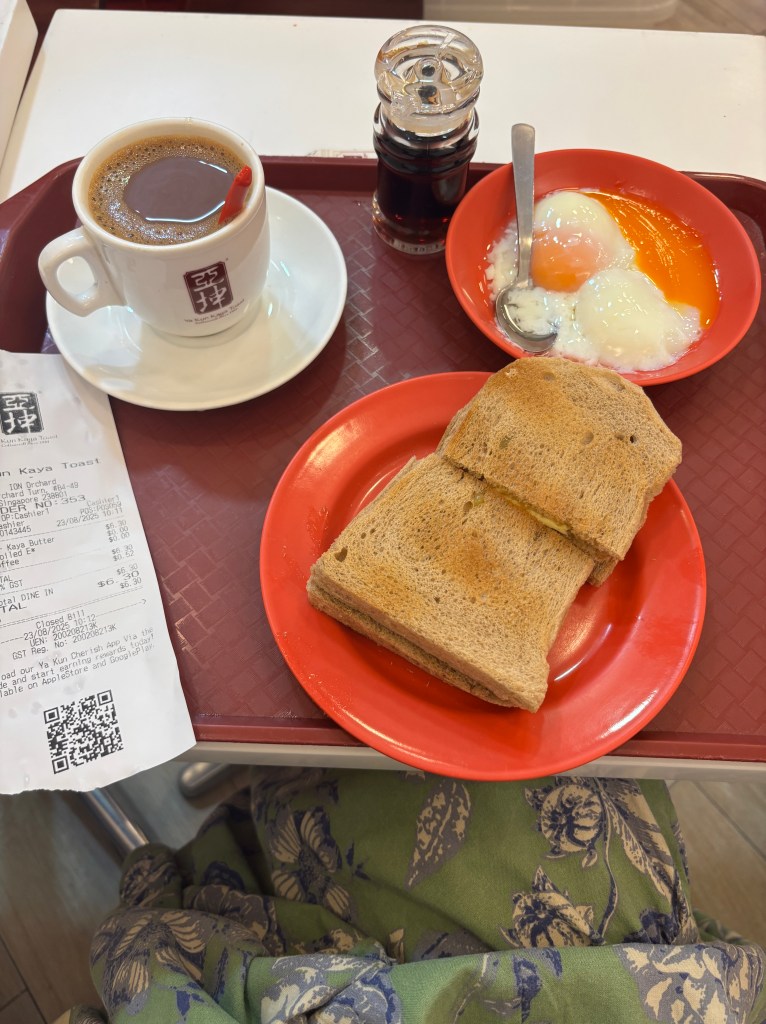
As this post is not very chronological I switch now to the start of my day. I wanted to breakfast classical Singapore style going to Ya Kun Kaya Toast. It was delicious and definitely a big recommendation when visiting Singapore:
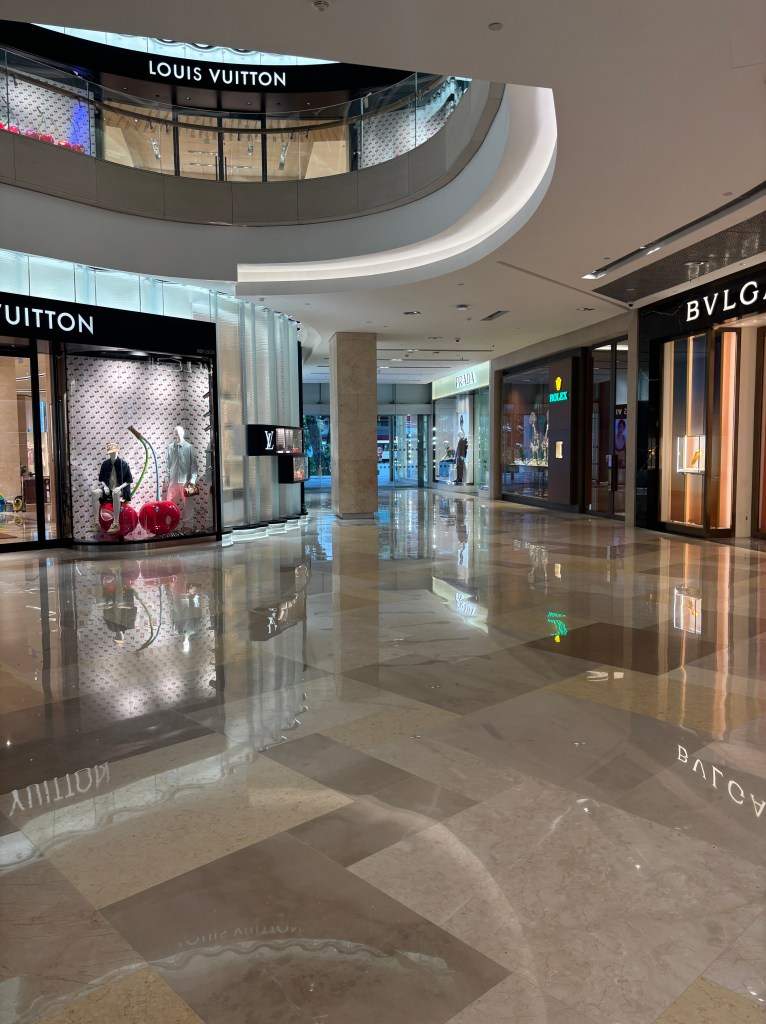
Excursus: On my way to Ya Kun Kaya Toast I stepped into the mall, to be precise ION Orchard, that was so posh and such a massive accumulation of all luxurious brand that you ever wished for that I had a throwback to my Uni time in the UK. So where is the connection? As you might have already recognised I love my Uni time back than (hint, hint) but I think I didn’t shared my financial situation yet. To be very straightforward I was to poor to afford the bus ticket to Uni and had to walk almost an hour one way each to uni. Was absolutely no problem and this is not a complain just to make it clear. This was also the only time during my whole student time I had to ask my dad for some extra money – I was freezing so badly in my dorm and wanted to buy a jumper. Contrast program my Asian fellow students. First of all during my whole Masters in the UK I only met one British fellow student. Besides that it was the Dutch and us (Germans, Czechs, Italians) who were pursuing the double degree. All other students in the Master programm were Asians (from China, Philippines, Thailand etc.). So as we literally couldn’t afford the bus they instead carried the latest designer bags from Gucci and Prada to the lectures. Newcastle University was already completely aligned to their needs, which is perfectly fine as they are the key target group, and for example the canteen was basically only serving Asian food. That was probably the first time when I realized from first hand experience the problem that Europe is falling behind.
Besides that I had a Durian biscuit at a Hawker Center. I wanted to have proper meal there but I went at an off time in the afternoon so almost everything was closed, my planning mistake:

Just a random side aspect of my trip: I had a layover in Doha on my way to Singapore and was absolutely overwhelmed by the airport. Changi is also a great airport but what I am asking myself: if a country becomes wealthy it will build its infrastructure than. So is the perception of wealth we have of a country formed by the point in time when it became wealthy? Especially going to China, with its massive rise in the last decades, the perception will be biased in a very positive way as everything is super modern right now. As keep an already existing infrastructure working and slowly improving might be more difficult then building one from scratch so could this be a point that even further enhances the perceived decline of Europe? What do you think about that? Feel free to share in the comments.
So now the post is definitely to long but if I cannot tip e-mails I have to do some compensation instead. Guys, keep your fingers crossed for me that everything works with the VPN in China – I hope I can keep updating you as I recognized how much I missed writing since Uni. If you do not hear back in the next two weeks from me do not worry anyways please.


Leave a Reply