
As you might know I am a weak auditory learner and as I had today basically the whole day a tour, that felt partially like a lecture, I try my best to share my insights that I gained during the day. By the way it was raining cats and dogs the whole day (literally; seems like I have a favour for countries that are heavily on rain). I learnt that rain stands for money in Chinese tradition – so becoming rich seems inevitable know. Aside from that I was also lucky that I visited Chinese wall and Summer palace already yesterday as both was closed today. My Barbour jacket and me were projecting our inner Britishness and stepping into the severe whether – the willingness to learn is truly strong.
The closest I came to chairman Mao today, as depicted down below. Unfortunately the Tiananmen Square was unopen today as there are currently busy preparations ongoing for the 80 years victory celebration of China defeating Japan in WWII. My tour guide Susan today told me that they call them the Japanese ghosts and still do have hostile feelings towards Japan because of what they did in that time, like Nanjing massacre, to the Chinese. My tourguide Rosy in Singapore, who was by the way highly educated and was very aware of the guilt culture that Germany developed after WWII (she listed the kneeling of Willy Brand in Warsaw), also told me that they are absolutely not in favour of Japan as they, in contrast to the Germans, never apologised for their actions in Singapore in WWII. So just into glimpse into that, without a claim for completeness. Regarding Mao Susan told me that overall he is perceived positively in China but made some mistakes (which matches with the famous statement of Deng Xiaoping that Mao was 70% right and 30% wrong).

The next point in the agenda was the Forbidden City. This year the Forbidden City will be open to visitors for 100 years. The moat that is surrounding the Forbidden City is 52 meters broad – as narrows could fly up to 50 meters this was the requirement to protect the city properly. The Forbidden City was the seat of two Chinese dynasties: the Ming and the Qing.
First a short overview of the two dynasties:
Ming dynasty

They were the imperial dynasty of China that was in power from 1368 to 1644. The Ming was the last imperial dynasty of China ruled by the Han, which is the major ethnic group in China. One of the most important rulers of the Ming was Yongle Emperor (1402-1424). He was the emperor who shifted the capital from Nanjing („nan“ stands in Mandarin for South and „jing“ for capital) to Beijing („bei“ is North in Mandarin). The construction of the Forbidden City initially, as it was later expanded, took from 1407 to 1420. The Ming dynasty ended in 1644 – Chongzhen, the last Ming emperor, accompanied by a eunuch servant, hanged himself on a tree in the imperial garden right outside the Forbidden City. The Ming dynasty is described by historians as one of the greatest eras of orderly government and social stability in human history. In the Ming time a rigorous examination system was permanently established which allowed theoretically anyone to join the ranks of imperials officials. Besides that during the Ming era literature, painting, poetry, music and the Chinese opera were flourishing.
Qing dynasty

The Qing dynasty was the last imperial dynasty in Chinese history and was succeeded by the Republic of China. It was Manchu-led and lastest from 1644 until 1912. During the revolution in 1911 literally old braids were cut of: in the Quing dynasty men wore a curtain hair style including a braid which they had to cut of during the revolution.
Three emperors are in my eyes especially important:
First it is Qianlong (1711-1799). Referred to as an early modern state-maker he delivered focal reforms. For example he expanded the the system of Palace Memorials, which brought frank and detailed reports on local conditions directly to the throne without interception. Besides that he created a small Grand Council which became his de facto cabinet. Key positions were distributed skillfully between Manchu and Han Chinese. Additionally he set up the Treaty of Kyakhata to enhance diplomatic understanding with Russia. In exchange for territory and trading rights China would receive free hand in dealing with Mongolia.
Second is empress Dowager Cixi (1835-1908). Entering the imperial court in the 1850s as a concubine she had a miraculous rise and even vastly criticised for her extravagance she was an extremely powerful woman in times when the natural place for woman was not seen as empresses. She was supervising the Tongzhi Restoration, which were a series of moderate reforms that helped the regime to survive until 1911. Whilst refusing to adopt Western models of governments, she supported technological and military reforms. Whereas supporting the Hundred Days‘ Reforms of 1898 she feared the sudden implications. She placed the Guangxu Emperor under virtual house arrest for supporting radical reforms, publicly executing the main reformers. After the Boxer Rebellion led to the invasion by Allied armies, Cixi initially backed the Boxer groups and declared war on the invaders. The defeat was a stunning humiliation ending with the occupation of Beijing and the Qing regime on the brink of collabs. Cixi was forced to flee to Xi‘an. When she returned she began to implement fiscal and institutional reforms with the target to turn China into a constitutional monarchy.
Cixis living room in the Forbidden city;
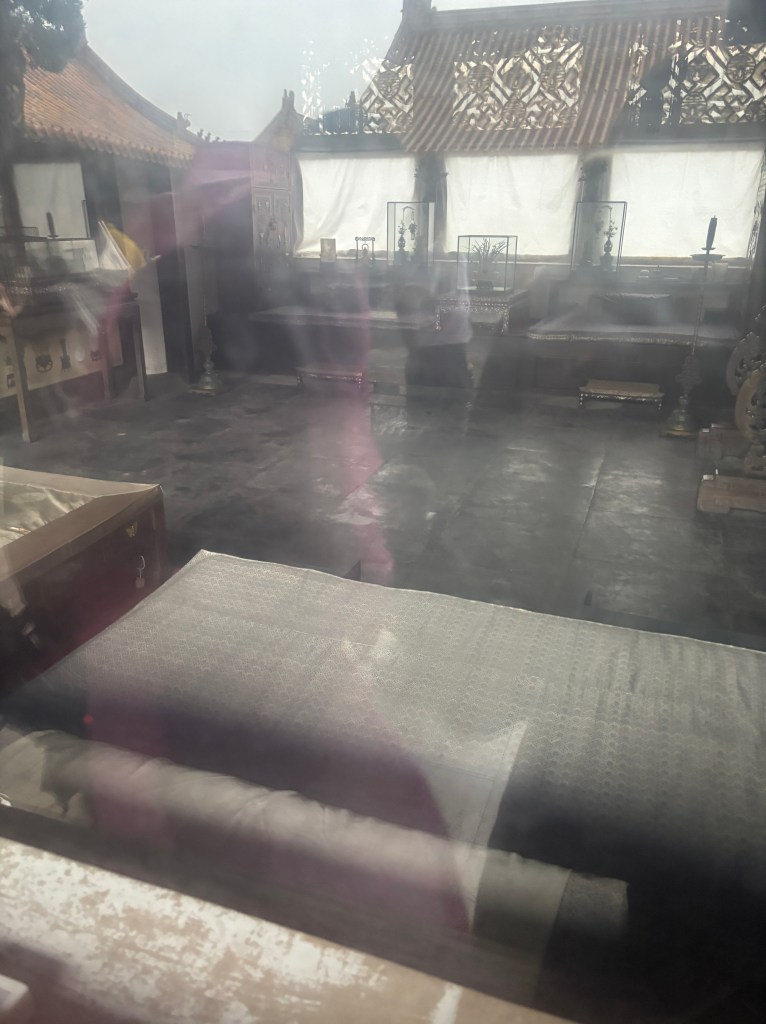
Third is Puyi (1906-1967). He was the last emperor of China who was reigning from 1908 to 1912 and was forced to resign. He became, chosen by Cixi, emperor at the age of 2 years. After his abdication Puyi and the imperial court were allowed to remain in the northern half of the Forbidden City as well as in the Summer Palace. Puyi had a Scotish teacher, Reginald Johnston, who arrive in 1919 in the Forbidden City. As there were still believes that the monarchy would eventually be restored it was seen as an important target to prepare Puyi for the challenges of the modern world and Johnston was hired to teach Puyi subjects like political science, constitutional history and English. In 1924 Beijing was taken over by warlord Feng Yuxiang and Puyi was expelled fron the Forbidden City the same day of the takeover. After the Japanese invaded Manchuria and established the puppet state of Manchuko in 1932, they installed Puyi as the state‘s chief executive. At the end of the Second Sino-Japanese War (the one wherefore the above mentioned parade will take place) in 1945, Puyi fled the capital and was captured by the Soviet Red Army. In 1946, he testified at the Tokyo War Crimes Tribunal, and in 1950, was repatriated to the People’s Republic of China. Puyi was then imprisoned and re-educated as war criminal until his release in 1959. He died in 1967 and was buried near the Western Quing tombs in a commercial cemetery.
Where Puyi biked (explanation down below):

The Hot pot of the Quing dynasty:

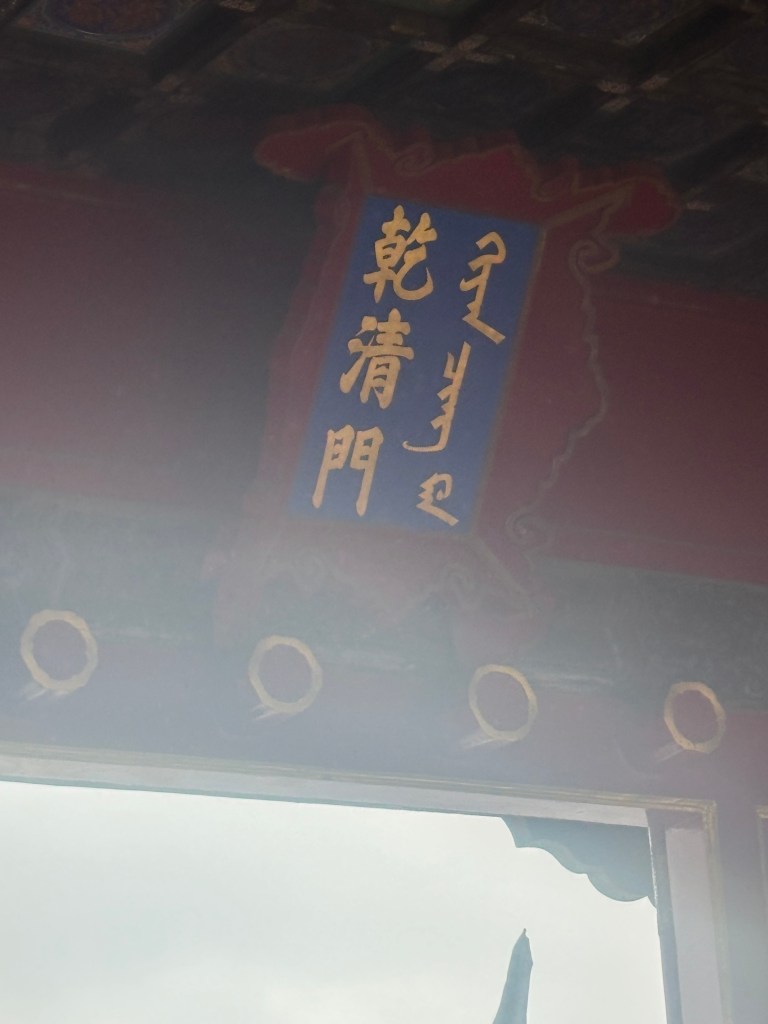
The fact that the Quing dynasty was Manchu-led is reflected by the bilingualism in parts of the Forbidden city:
So after this short glimpse into the dynasties now back to the Forbidden City. I really did my best to absorb everything but the sheer size, density and richness of its history were frankly speaking a bit overwhelming. The Forbidden City consist out of two different sections: the outer and the inner court. The outer court is dominated by the Three Great Halls (Hall of Supreme Harmony, Hallo of Central Harmony and Hall of Preserving Harmony). The Forbidden City is laid out almost symmetrically on a 7.8m north-south axis.
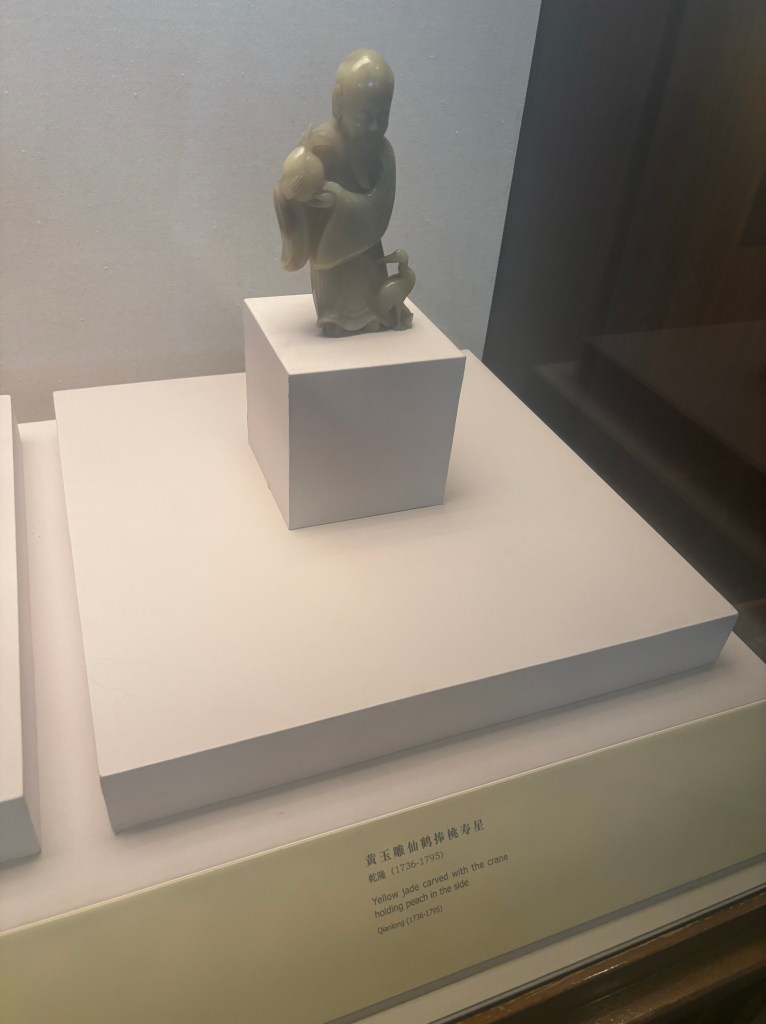
Overall everything is deeply load with symbolism and ambiguity. Basically everything in the forbidden city has an underlying meaning is it in symbols or numbers. Nine is the most important lucky number, so you will find for sure a lot of (e.g. small animal figures on the roofs, as you can see on the picture down below) that are nine. Besides that longevity is a crucial symbol that is for example reflected in the peach (a Chinese symbol for longevity; second picture). Jade is also focal in Chinese symbolism and is another symbol for longevity. You can see the good of longevity made of Jade in the third picture. All temples in the Forbidden city, and in general temples e.g. in the Beihai park, do have thresholds in order to keep evil spirits out of the house. As Puyi learnt how to bike he let remove the thresholds from his garden so that he could properly drive there.
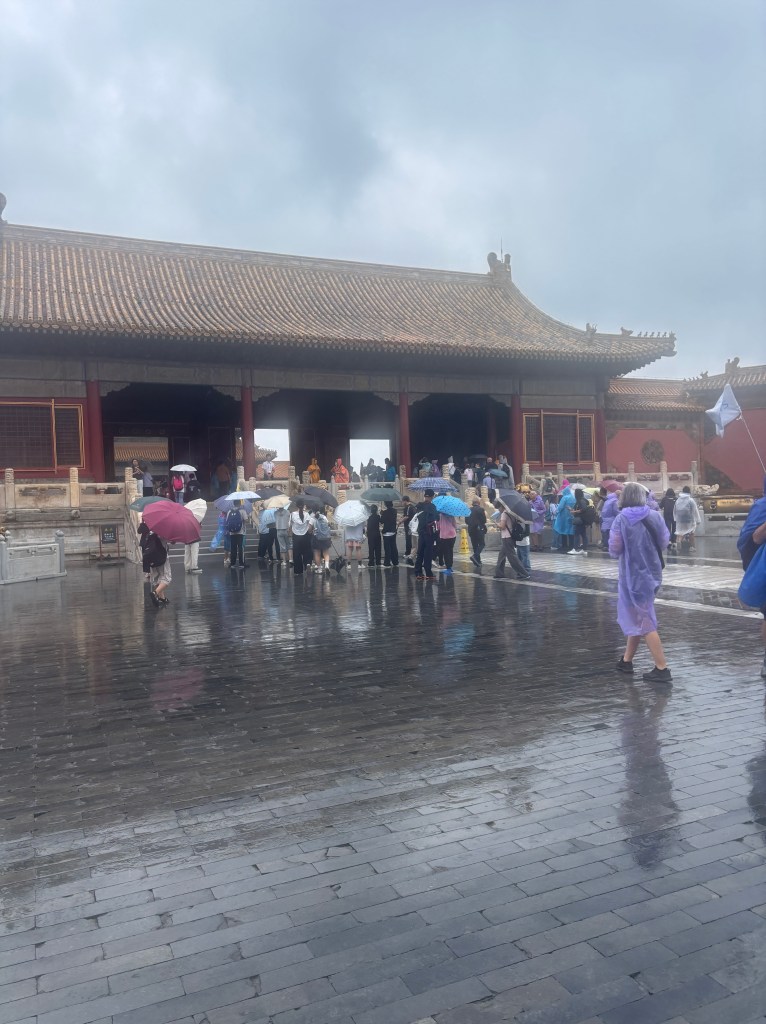

Some more impressions of my visit there:

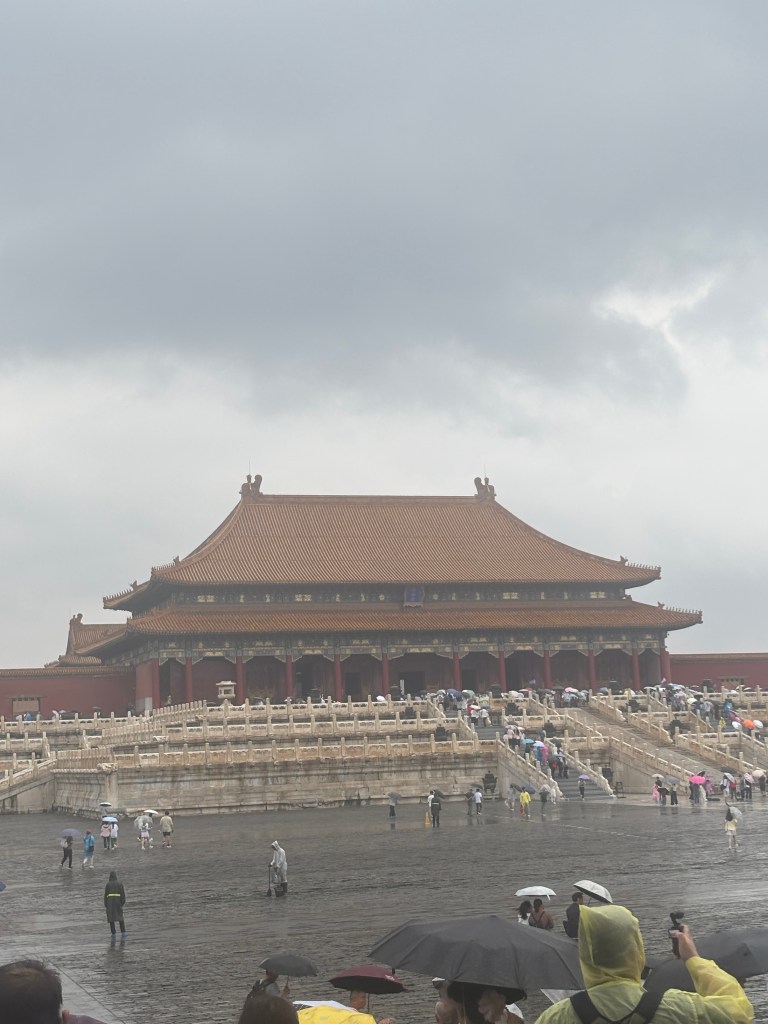

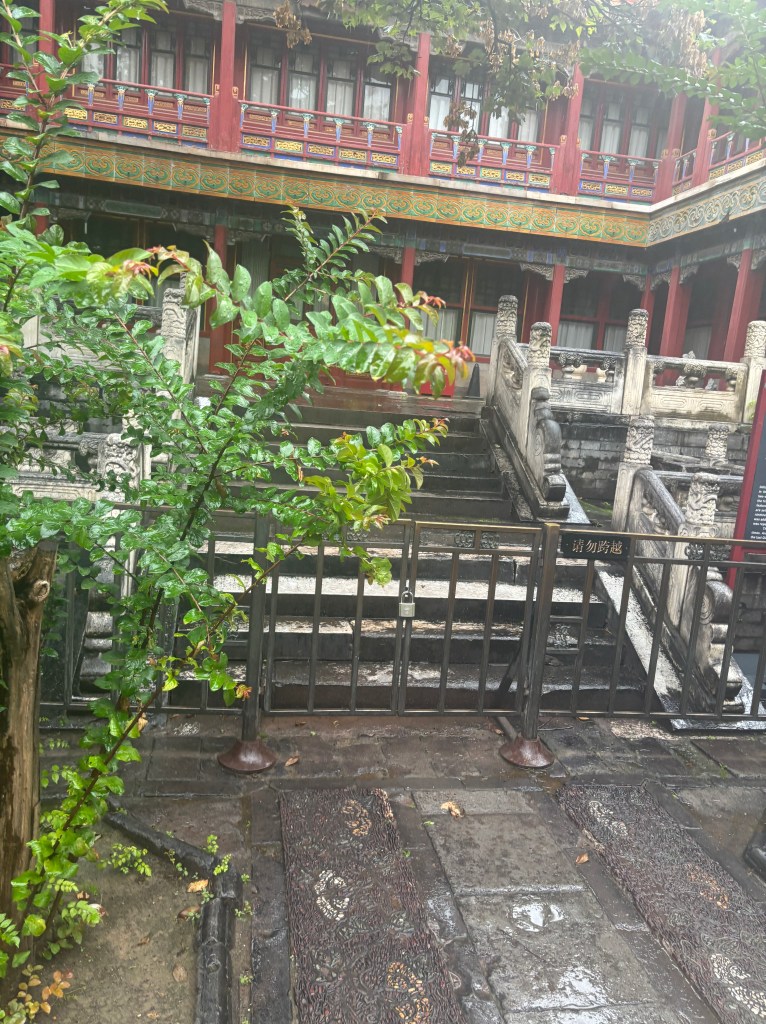
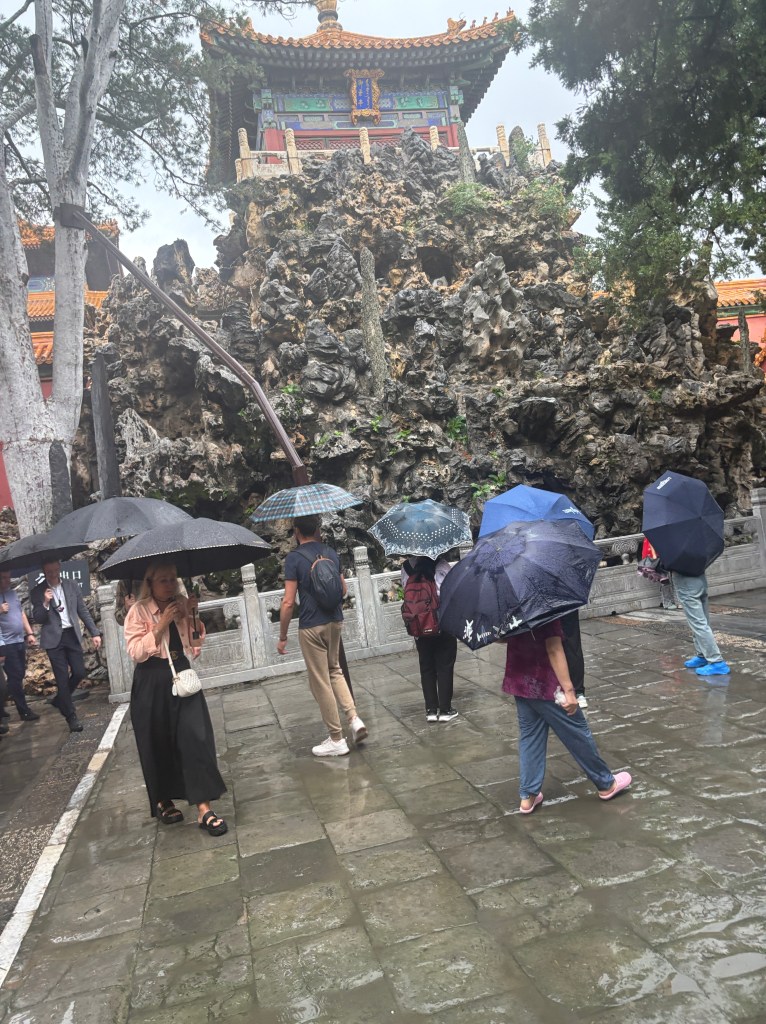
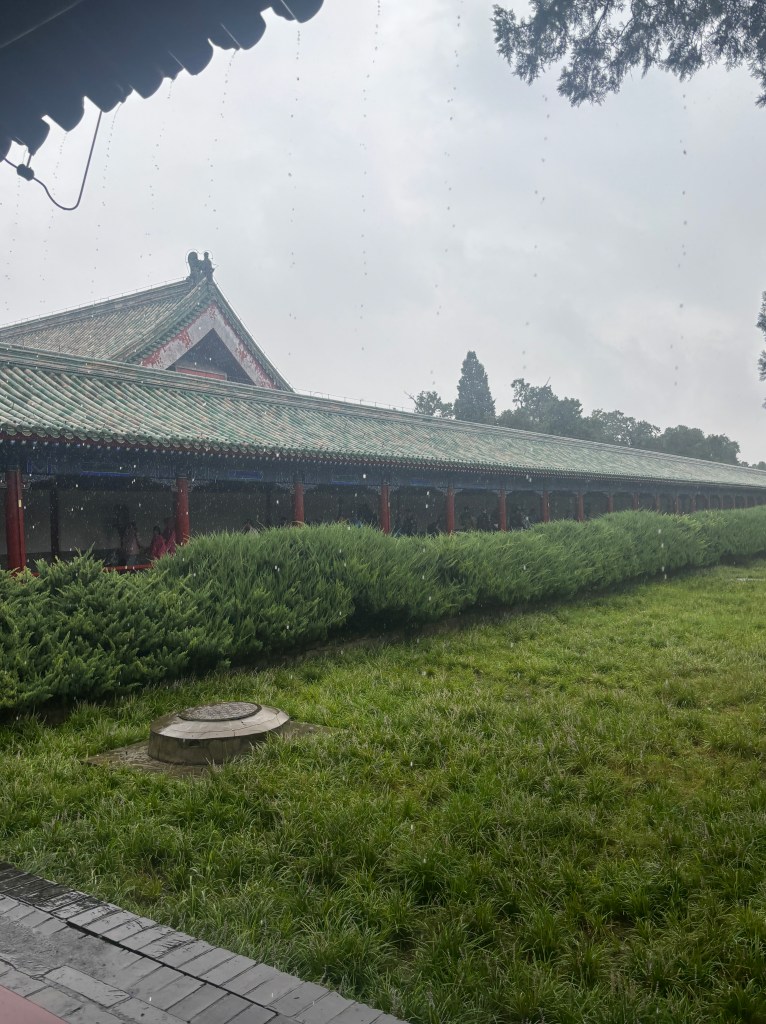
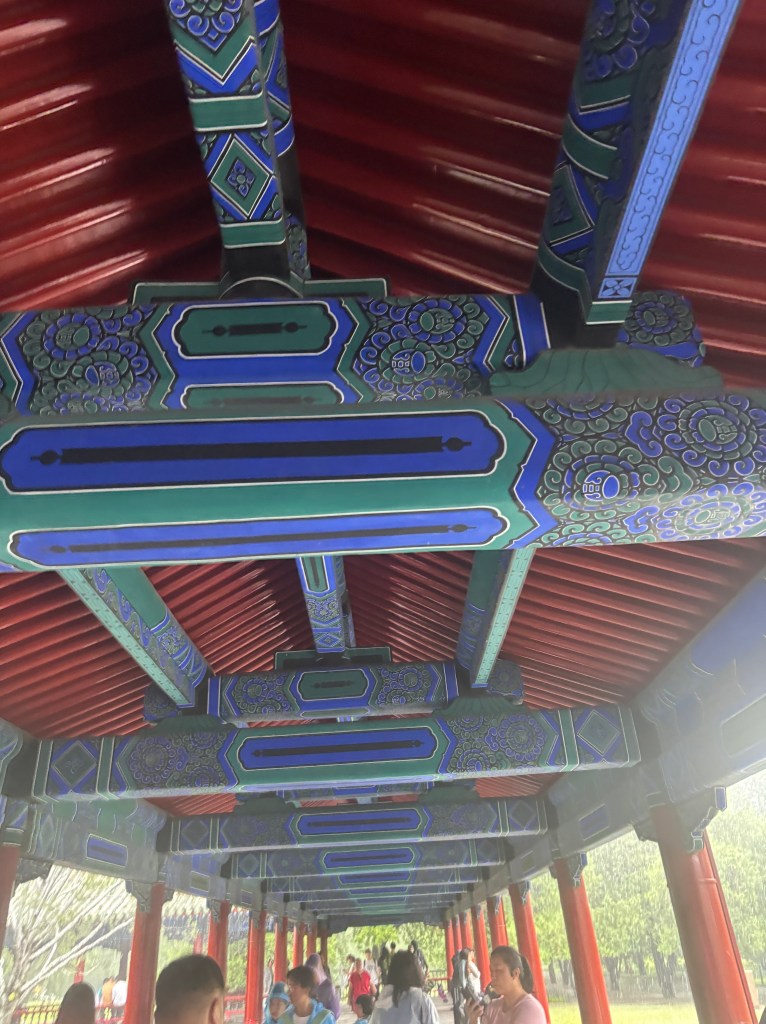
The next stop in our tour was Temple of Heaven. This temple served the purpose to perform solemn rites by the emperor in order to pray for good harvest. A couple of impressions (btw as blue is my favorite colour, which has next to red and yellow, of course also a distinct meaning, I really liked the temple):

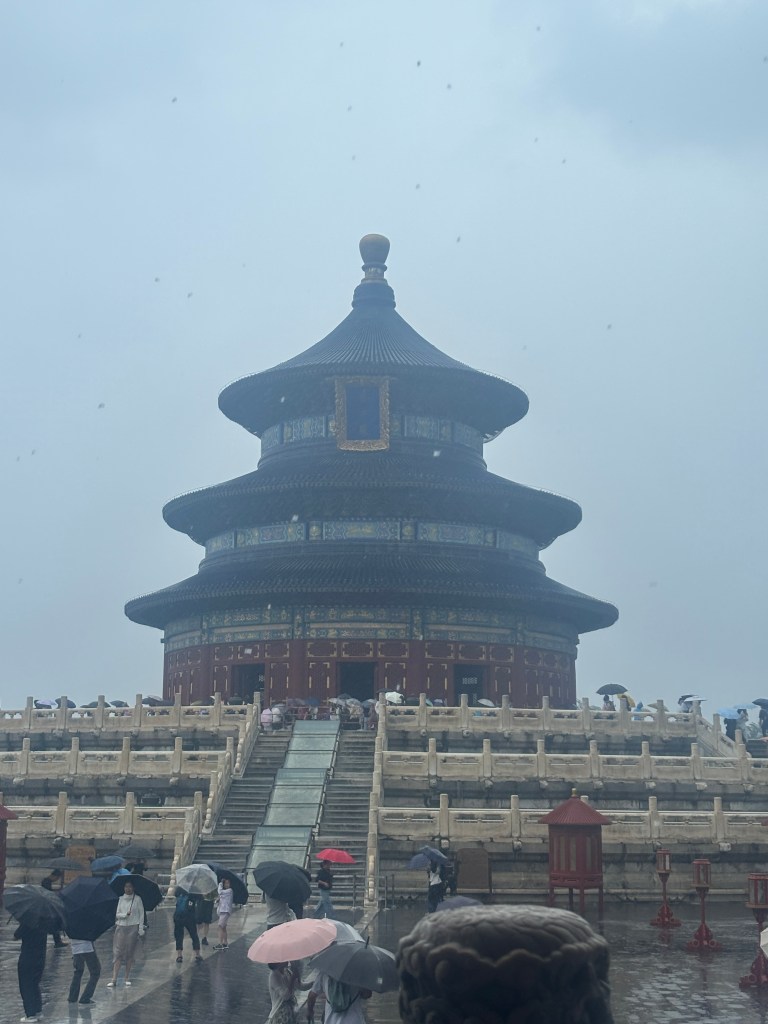
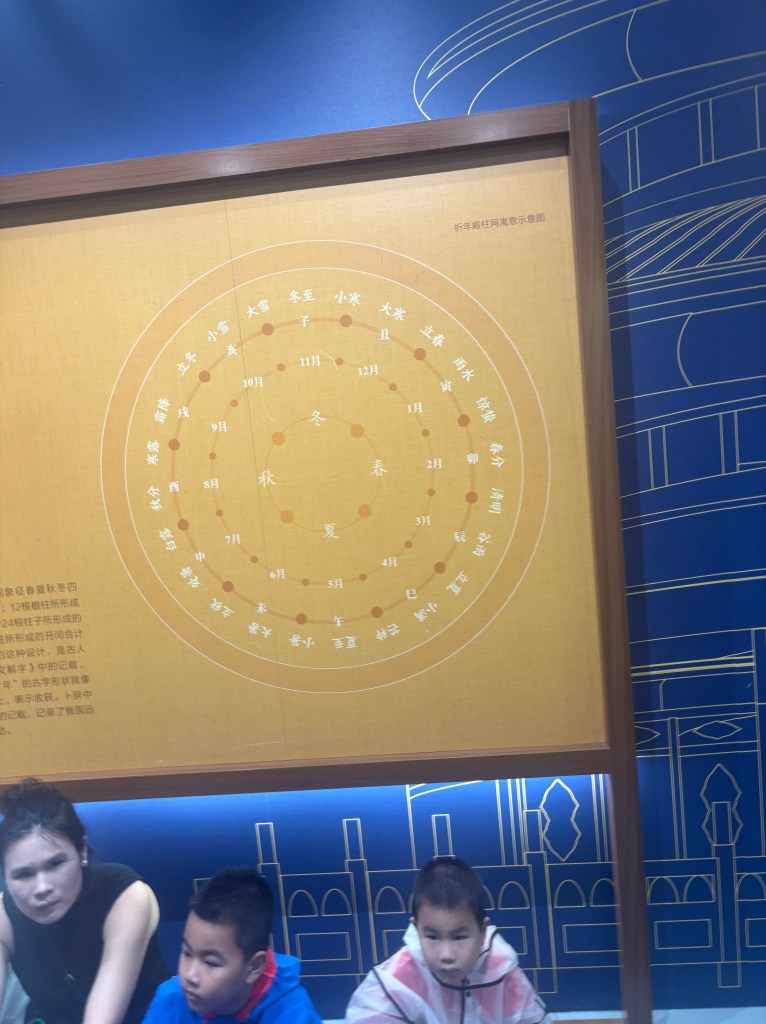
Also temple of heaven is once again deeply loaded with symbols and lucky numbers. So rectangle symbolises earth whereas the circle represents heaven. The different circles down below do reflect seasons, months and many more things I honestly do not recognize (probably Mandarin native speaker could help here):
In exchange for the Summer Palace visit we went instead to a mall, where you can also buy all those designer fakes (which is literally a concealed world and was like walking into a hidden safe). Your girl was thriving there. After various stops we went to a pearl shop – and as you might know I love pearl earrings. So it was clearly a match and I already had fun choosing. I was briefed that you have to negotiate in those markets – let the games begin. As I ocassionaly negotiate in my professional life (normally about Rappen amounts) I am somehow trained here. In the end the Chinese ladies wanted to know what I do professionally and seemed genuinely impressed and called me a good negotiator and a tough one (don’t know if it was sweet talk and strategy but according to my people skills it felt real). I had a lot of fun doing so (we negotiated many rounds and you always have to pretend to leave in order to receive the next discount) and now have new beautiful pearl earring in my treasury. I loved the sense of business of these ladies and their dedication and definitely have more in common with them than with a German union secretary. That is a more general observation that I made here: people are still hungry for business and everyone wants to make money (to quote once again Deng Xiaoping: „To get rich is glorious“). The work ethics of everyone I interacted with – in my hotel, in restaurants etc. – was exceptionally strong and you can literally feel the hunger – as someone who is also extremely driven in her professional life I clearly admire that. The Chinese dream is real.
Besides that I found a great supermarket that, what else, had to be analysed in dept immediately. One of the most fun things for me to do so:


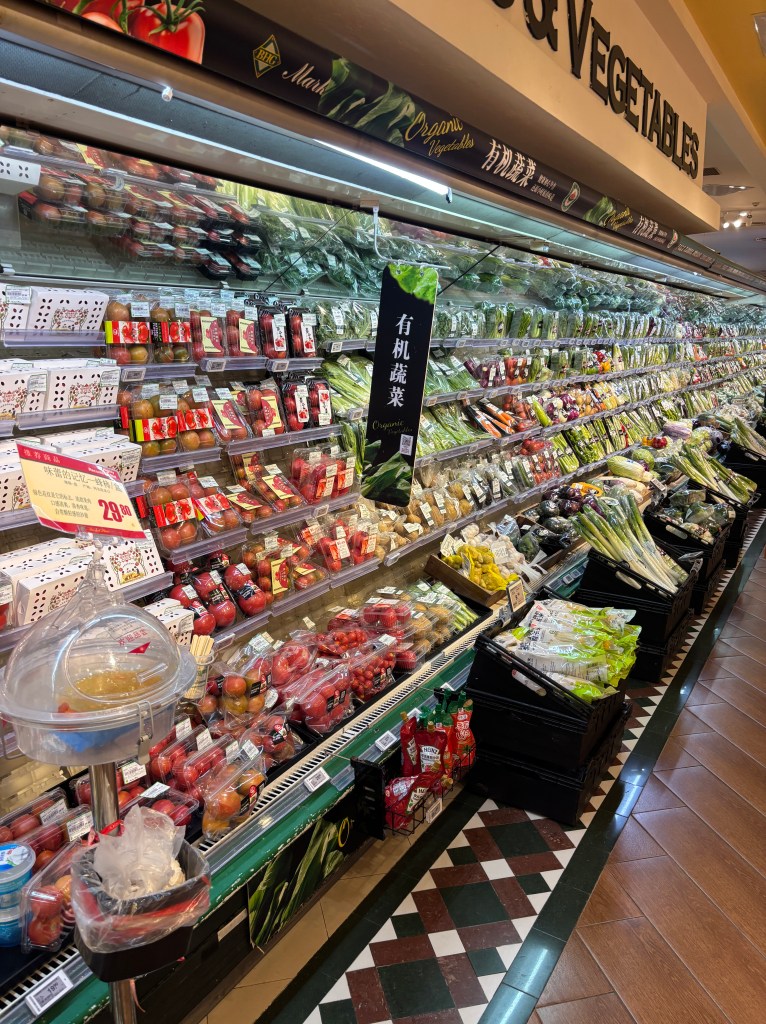
Could I life in China? The answer is now a clear yes:

Does btw anyone know how the retail landscape/supermarkets is structured? Are there dominating chains? And in the rest of Asia?


Leave a Reply