
Today I woke up seeing the skyline of Shanghai and deeply energized I was, once more, highly driven of diving into another day of discovery and exploration of this world city. So in order to give you a comprehensive overview what I have done in the last two days, long story short: had by coincident a tea ceremony, went to Yu Garden, did some major shopping damage, ate Xialongbao and was living and vibing my life in Shanghai (including satisfying the caffeine addiction).
As a pro tourist I obviously oversaw that Yuyuan Garden, where I went yesterday in full self-confidence, is closed on Monday. So your girl improvised and was strolling around at the Bazaar that is surrounding the garden. Luckily capitalism doesn’t know a break in China. A salesman at a teashop where I was looking around, and btw all sales persons in the shops here are extremely business savvy, definitely reminds more of the US than of Europe, was telling me that they also offer tea ceremony. As this was on my list anyways and this opportunity came out of the blue, plus he showed me the most stunning view over the (obviously completely empty) Yu garden, I was already sitting in a chair with many teacups ahead of me.
The view to Yu Garden from the Teahouse:
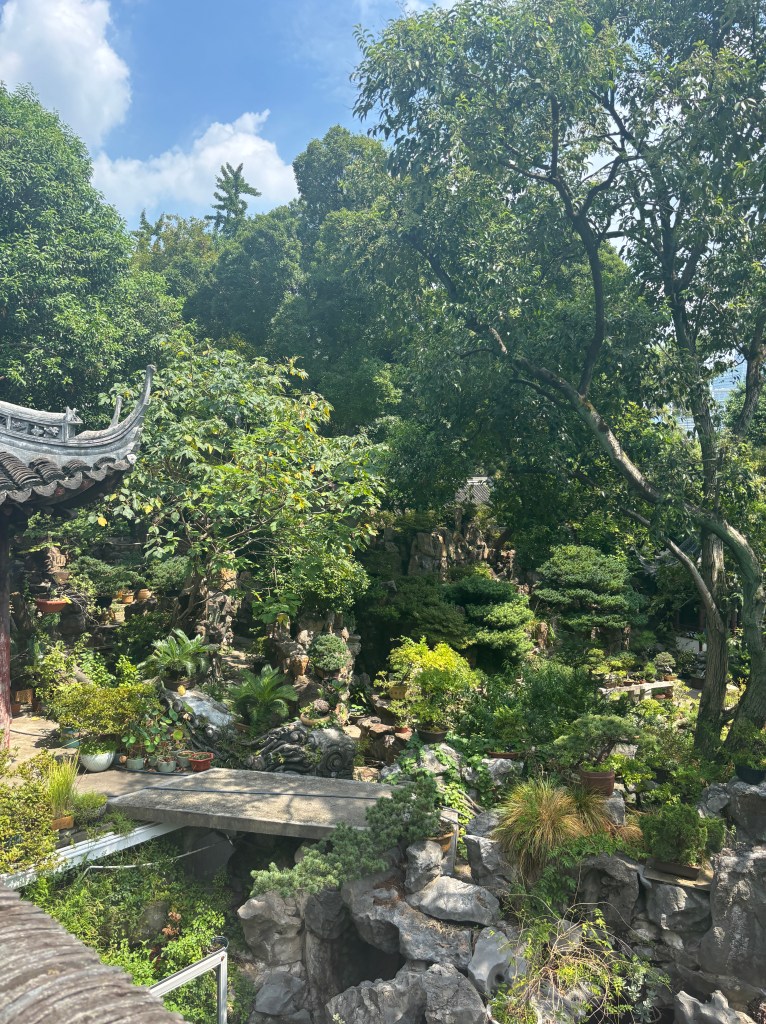
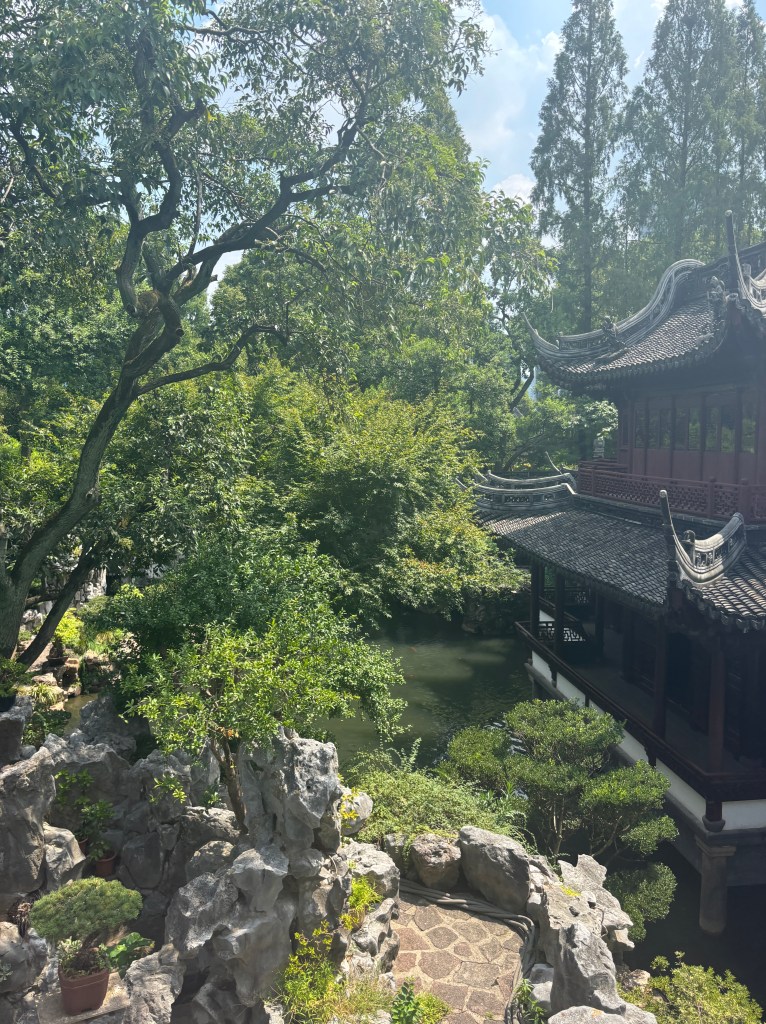
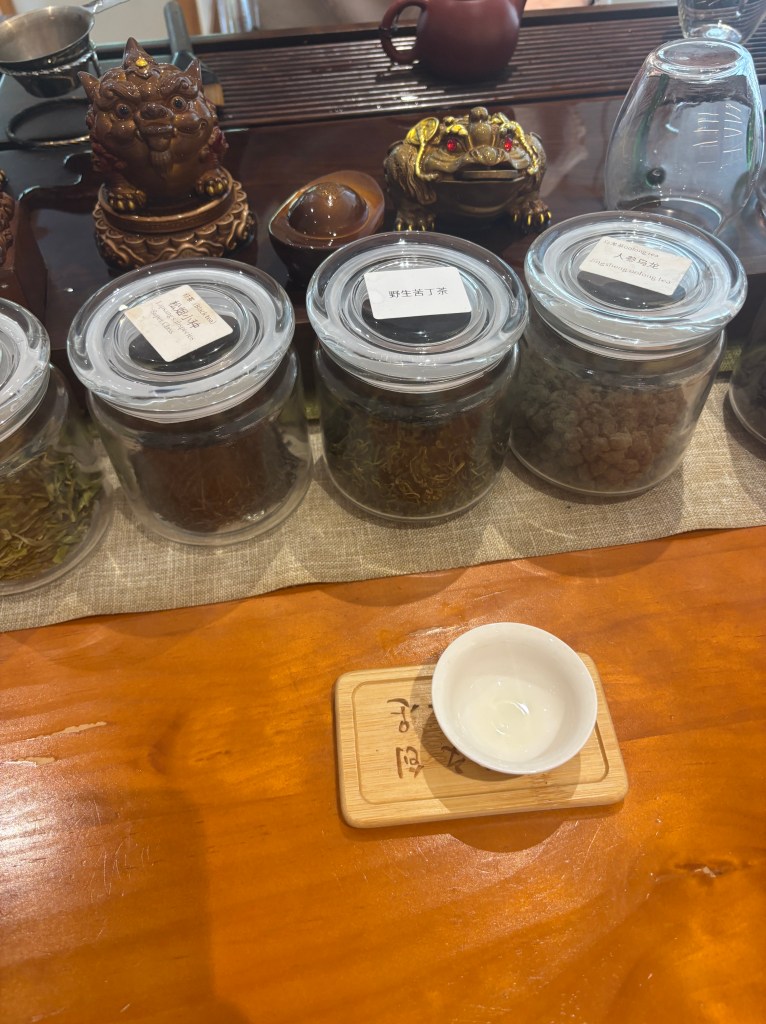
Time to become acquaintance with Chinese tea culture – I honestly have to admit with my favour for British tea culture, drinking Earl Grey and experiencing multiple classical Afternoons teas already, I considered myself as somehow knowledgable in this field. Now I have to state and admit that we are barbarians regarding tea in Europe. Chinese take their tea very serious and during the ceremony it dawns on me that what we consider tea has nothing to do with Chinese tea (tea bags!). Here is how I come to this pretty straightforward verdict (never drink tea with milk thats one of the worst sins; might continue anyways sorry). There are six different types of tea in China: black tea, green tea, Oolong, white tea, yellow tea and fermented/dark tea. In China it is said that when the leaves are three years old they are tea, after five years a treasure and when they are ten years old a medicine. There are sorts, like white tea, that can remain the whole day in water. During the ceremony itself, which has a great cultural significance in China for over a thousand years, there is a small teapots used (second pictures) to round out the taste of tea that is being brewed. The basic steps of a tea ceremony include: prepare team, offer or serve teas, appreciate tea, sniff teas, savor and drink, and taste tea. Fine tea is required in the tea ceremony. Aside from that in my ceremony the animals (second picture) were poured over with the boiling water for good fortune. So you clearly see very serious buisness, what lead to my above mentioned verdict.
The tea ceremony I had depicted:


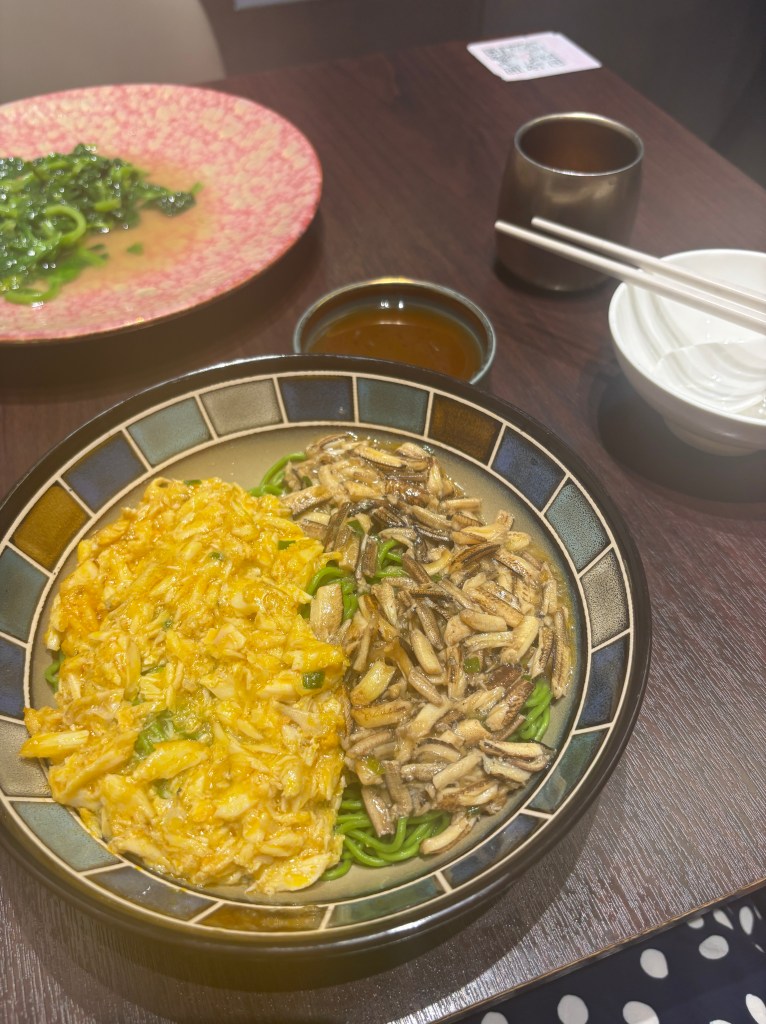
Besides that my foodie adventures included the following:
Amazing crab noodles

An amazing dirty pistachio latte at the cutest cafe, Mietal Hands, (this is definitely the place where I would spend my Saturday afternoons working on some E-Mails or next weeks presentation; could feel the vibe). Shanghai is a city of over 8,000 coffee shops (possibly the most in the world) and while global chains are omnipresent, the city‘s heart beats in its independent cafes. The rising young middle class of Shanghai are moving away from the tea-based traditions of their parents to embrace an espresso culture founded in the West but with a very Chinese slant:


Besides that, and more food content is about to follow, another pattern in this trip arose once more: luxurious malls. Today it was IAPM. I am getting used abundance of wealth, but still it is deeply impressive to me, and really make me feel demure towards the economic miracle China has archived, and I deeply respect what this country has accomplished in basically one generation:
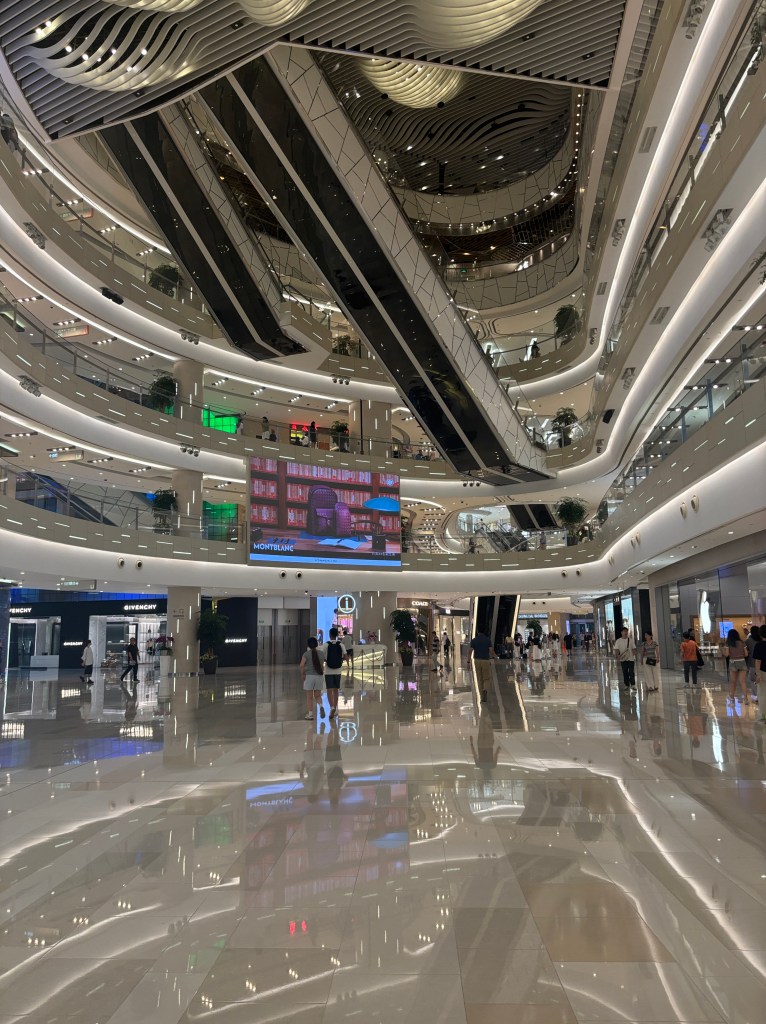
After some major shopping damage at Muji (yes I am an absolute Muji and Uniqlo lover) I had another delicious lunch at Din Tai Fung. Never heard of? Me neither until the chain slided into my Instagram reels yesterday. So let‘s have a short excursion into Asian business building and shed a light on chaebols. The ladder, I am aware of is not Chinese but South Korean, but back than in my Emerging Markets lecture in Groningen I learnt about those and as you miraculously made it until this point in the posting I cannot preserve you from this (small side fact: did you know that beloved Selfridges in London is owned by the Chirathivat family of Thailand?).
So first Din Tai Fung, which is a Taiwanese restaurant chain specializing in Chinese cuisine, particularly famous for its xiaolongbao. Based in Taiwan it has branches all across the world. The founder, Yang Bing-yi, an immigrant from Shanxi, initially worked for a cooking oil retailer in Taiwan. With his wife Lai Penmei he founded his own cooking oil retailer in 1958. As in 1970 the business was drastically diminished due to market changes they converted half the shop into making ans selling Xialongboa. These became so popular that the place was converted into a full-fledged restaurant in 1972. The chain grew quickly and in 1996 the first international location was opened in Tokyo and the first branch in North America in 2000. Today the chain has totally worldwide 165 stores and is internationally known for its paper-thin wrapped xialongbao with 18 folds. Besides that restaurant was awarded with a Michelin star (this is one of the crazy things in Asia you have a lunch including side and dessert for 17 Swiss Francs that is Michelin star awarded). My experience today at IAPM mall, all three dishes were amazing:
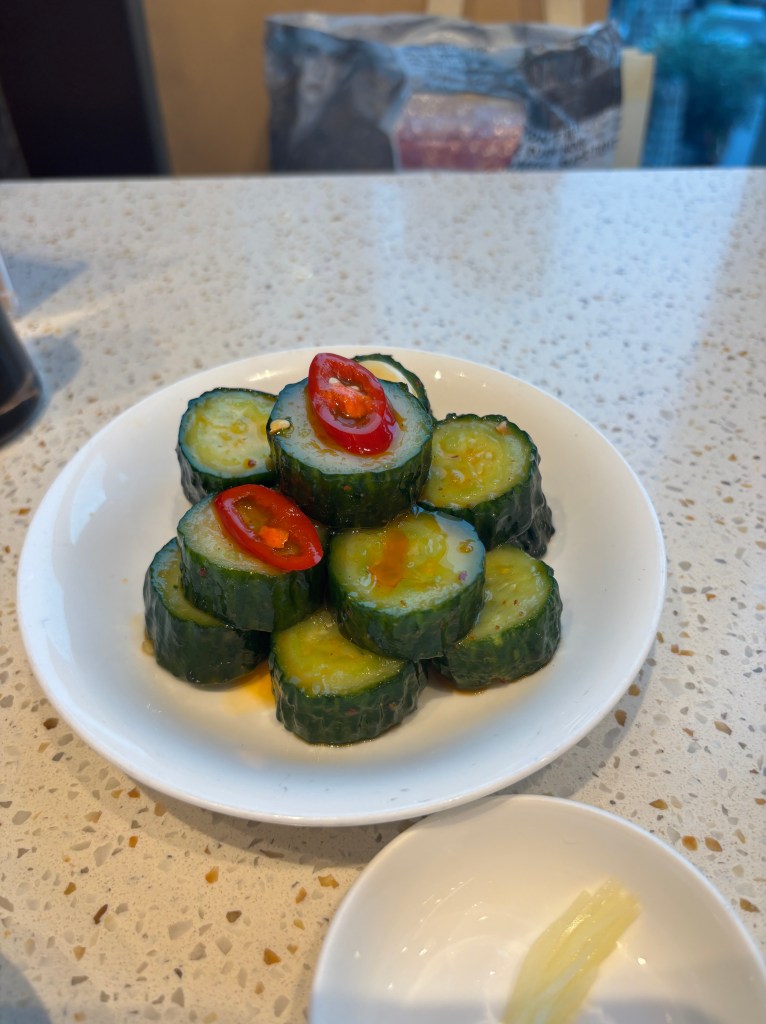


Confused by all the different types of filled dough? Me too, so here a comprehensive overview:
- Xialongboa: is a type of Chinese tangbao traditionally prepared in a xialong, a small bamboo steaming basket. It originated from city of Changzhou in Jiangsu and is an iconic dish of Jiangnan cuisine.
- Tangbao or soup buns: are large soup-filled steamed buns (baozi) in Chinese cuisine.
- Wanton: is a type of Chinese dumpling commonly found across regional staples of Chinese cuisine.
- Dumpling: is a broad class of dishes that consists of pieced of cooked dough often wrapped around a filling.
All my fellow Asian experts this list does not claim to be complete, so reach out for further additions.
To wrap up this section about Asian entrepreneurship: what are chaebols? These are the large industrial South Korean conglomerate, like Samsung, Hyundai and LG, run and controlled by an individual or family. Even though these company are globally highly competitive due to their usage of economies of scale, this leads to multiple problems in the South Korean economic structure. First of all, there is a massive power concentration in those families and a domination of the South Korean economy. Aside these structures are also vulnerable to corruption and are at risk for over-diversification. A glimpse into South Korean economy, lecture finished, sorry to many interests.
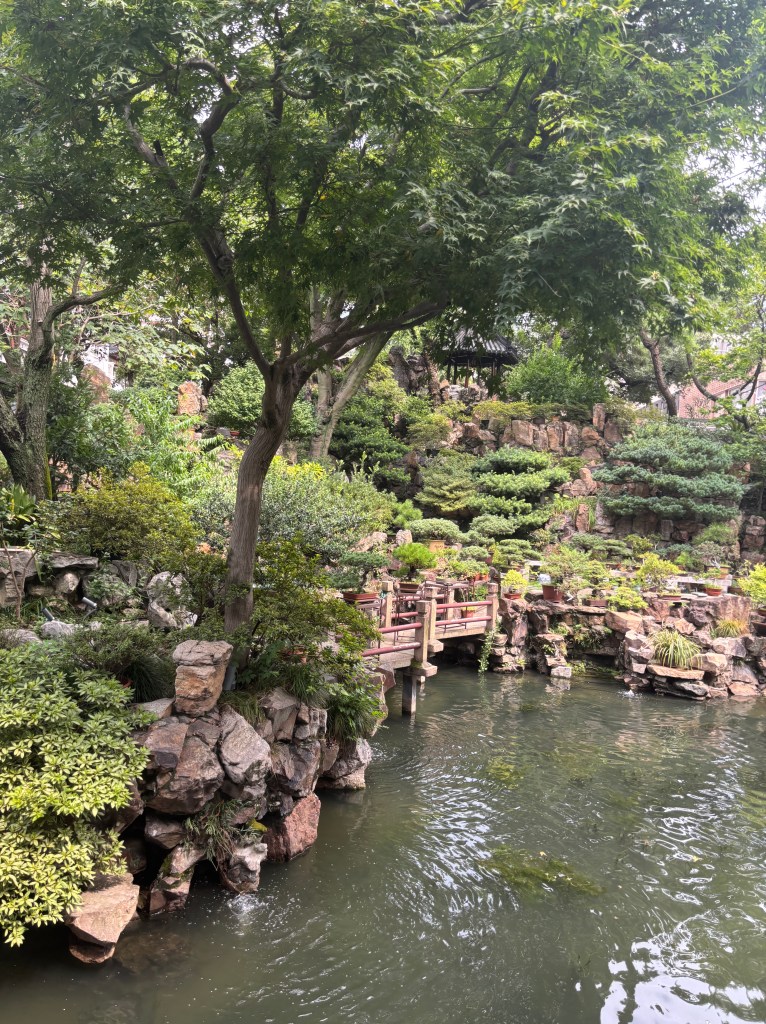
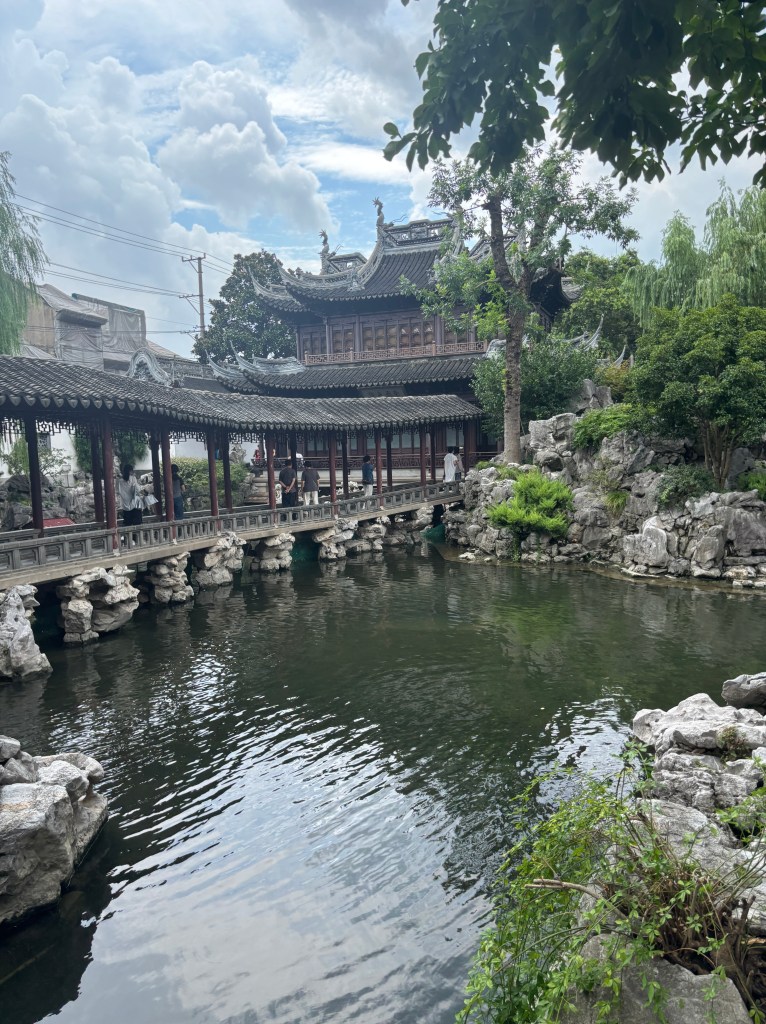
To find an end in this extended posting I made it to Yuyuan garden as well today. This is showcasing exemplary Ming dynasty (the one with the vases) garden design. The Yu garden was founded from the Pan family (yu means ‚pleasing and peace‘) and was developed over a period of 18 years between 1559 and 1577. Unfortunately the gardens were destroyed in 1842, during the First Opium War, and ruined again between 1850 and 1864, during the Taiping Civil War. Restored to their former glory, the gardens were opened to the publics in the 1960s.
Some impressions:


My last stop of the day I wanted to share was my excursion to a Chinese bookshop. As you might know I am a dedicated reader and spend quite some time in bookshops. But friends of my blog, that was, once again, a true mirror into the relentless educational will of East Asian. Never have I seen that many school books (compared to that our European departments for this type of books are ridiculously small). Demand and supply doesn’t lie – we should be aware. As you might know I am about to seriously enter the Mandarin game so I have to start, with three university degrees, at level elementary school class once again. I am not afraid to be a beginner and after some search with Google Translate I actually found some schoolbooks for class one – yeah welcome back in elementary school. Afterwards I was heading in the kids book section, as that is where I wish to be regarding literacy, and initially didn’t find initially anything appealing. After some research the following was found:
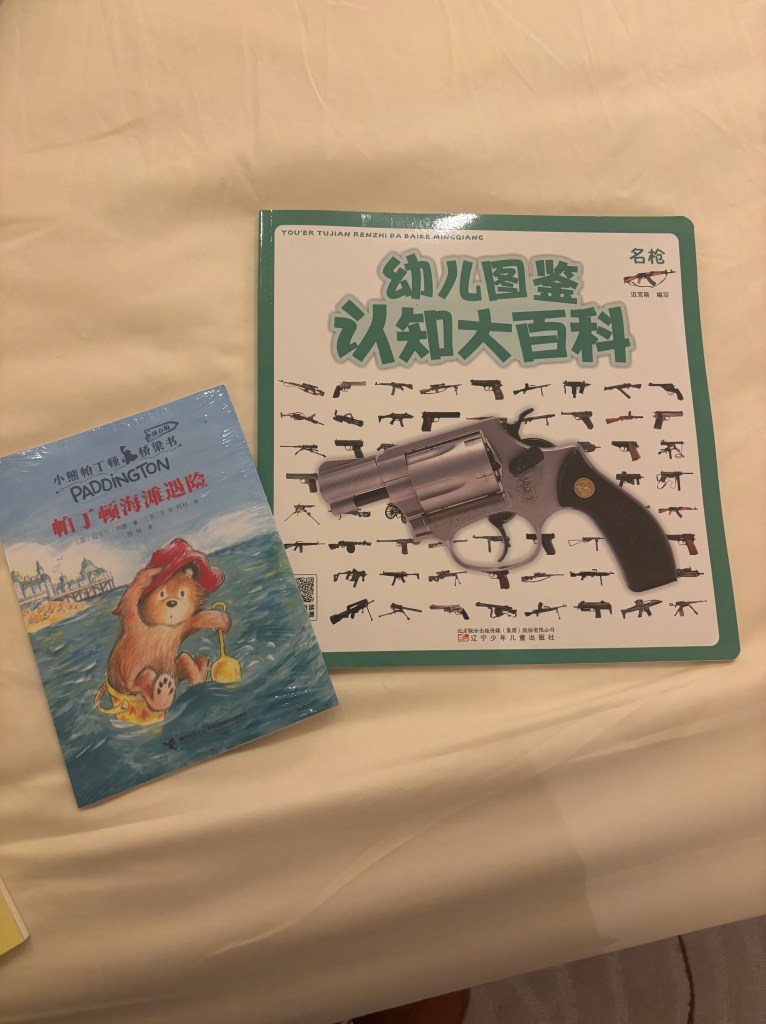
A wild mixture? Absolutely yes – Paddington obviously because of its distinctive Britishness. The other one, I feel requires further clarification. As you know I am in this hunting thing and weapons clearly were one subject in the education. I am absolutely not in favour of any riffles and it is after all only a tool. If you ever had a sharp weapon in your hand and felt anything else but overwhelming sense of responsibility and care than please step away from it. So to me the biggest horror than would be to make any mistake – zero tolerance in this case (which couldn’t happen anyway as I still don’t have a hunting license, so no worries). Found the book too wild for a child book anyway so I had to buy it.

 Just Another Millenial Travel Blog
Leave a comment